
Are you missing out on AWS Graviton Cost Savings?
Newer instance families on AWS aren’t just faster — they’re often cheaper. Graviton-based instances are a good example: AWS prices them lower to drive adoption, and in most benchmarks, they deliver better performance per dollar than their x86 equivalents.
This post breaks down where you can use Graviton (starting with EC2 and RDS), which instance types are available, and what kind of improvements you can realistically expect. If you’re still running older instance families, it’s worth reevaluating.
Graviton-Based Instances (EC2)
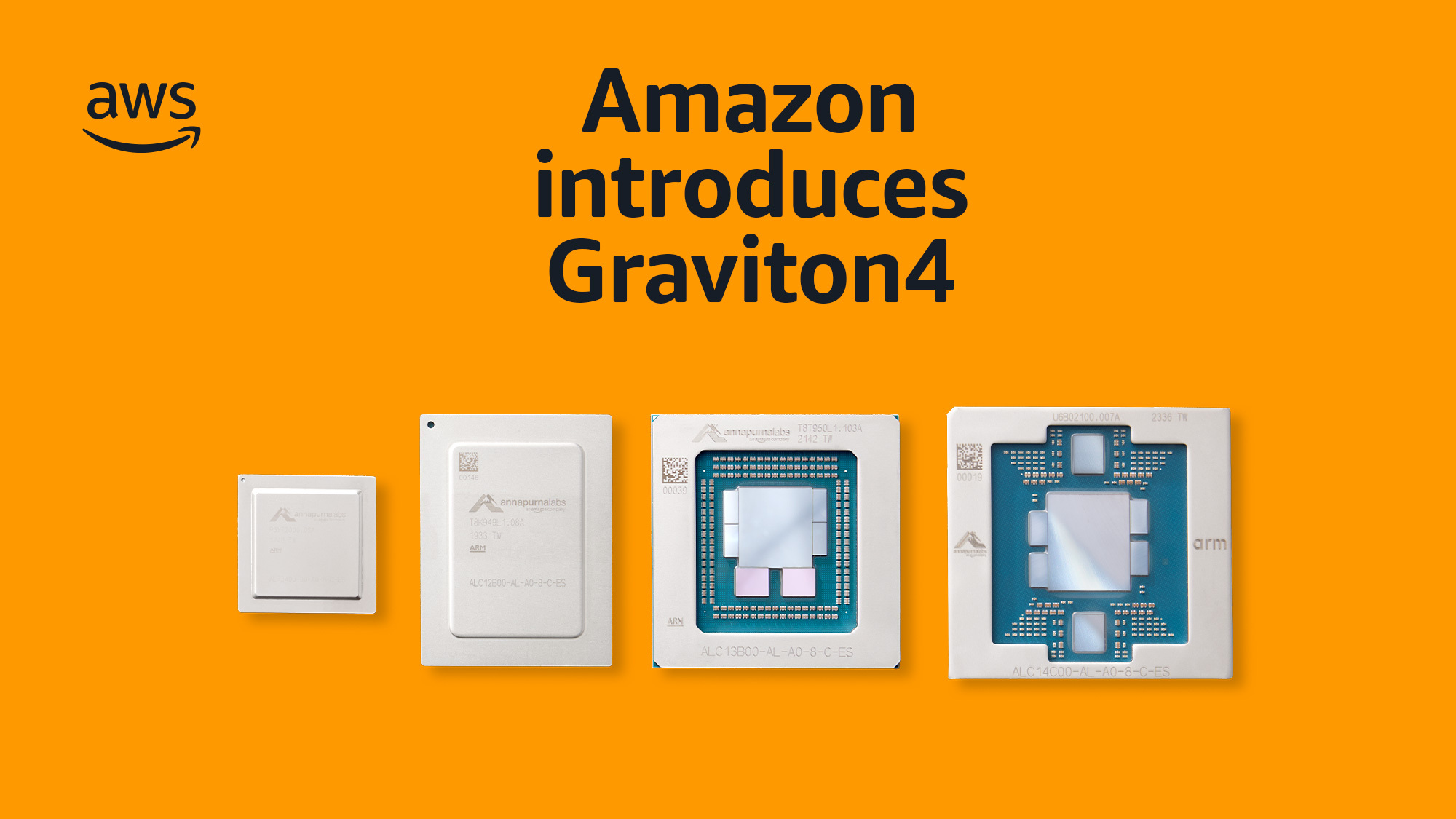
Today, Graviton is in its 5th generation, with Graviton5-powered M9g, M9gd, C9g, and C9gd instances now available for general-purpose and compute-intensive EC2 workloads. Graviton5 delivers up to 25% better compute performance than comparable Graviton4 instances, while earlier Graviton generations remain widely available across EC2 and other AWS services.
Graviton is available across all major EC2 instance categories, such as:
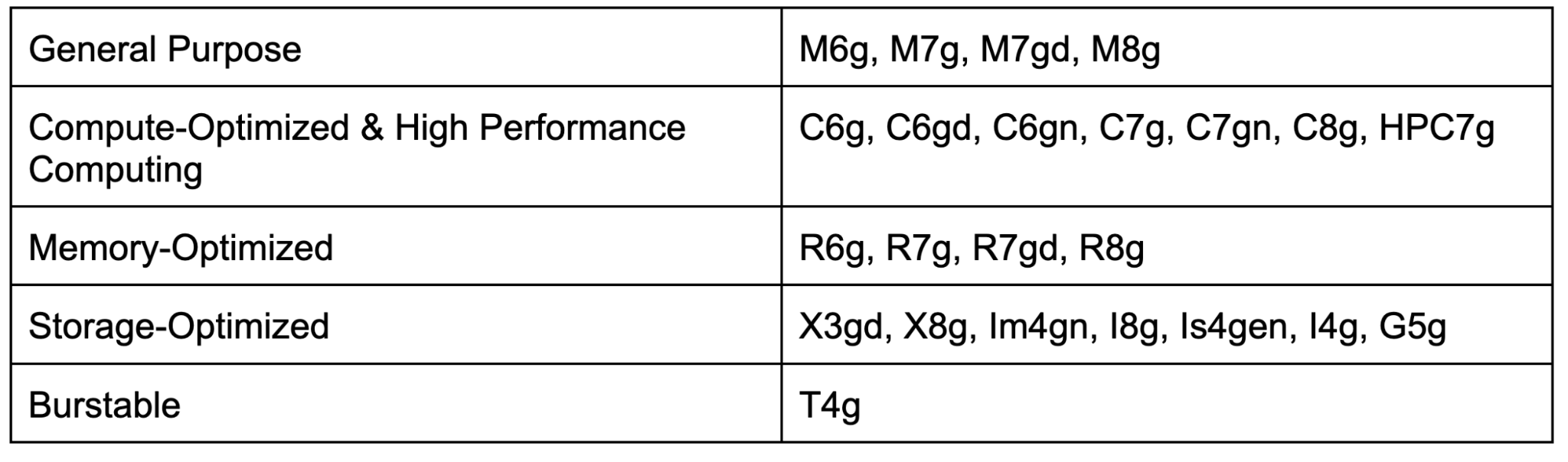
Benchmarks consistently show:
- Up to 40-60% better price-performance compared to x86 instances
- Lower energy use
- Improved throughput and latency
These benefits apply to typical EC2 use cases like web servers, microservices, containers, CI/CD runners, and stateless batch jobs.
You can use AWS Compute Optimizer to identify EC2 workloads that can migrate to Graviton, test with Arm architecture-based AMIs, and validate performance before switching in production.
Graviton Instances for RDS
If you’re running RDS on older x86-based instances like M5 or R5, switching to Graviton is one of the easiest ways to improve price-performance — and most teams haven’t done it yet. There’s no need to change your database engine or schema. In most cases, you can modify the instance type and immediately start saving.
Graviton is supported for PostgreSQL, MySQL, and MariaDB.
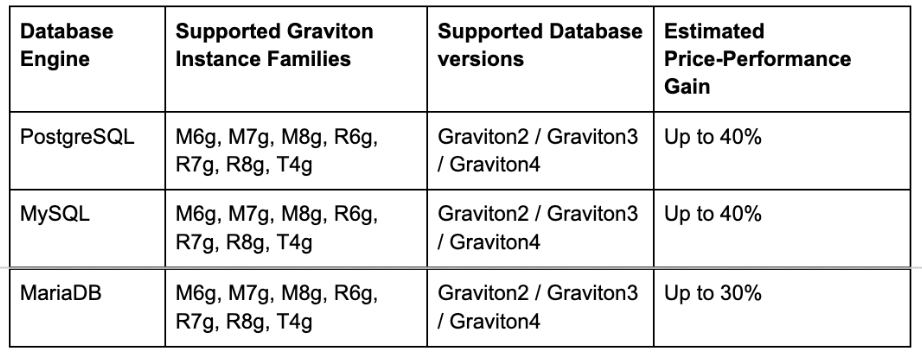
According to AWS benchmarks, Graviton3-based RDS instances deliver up to 27% better price-performance than Graviton2 and handle 29% more queries per second on average — with up to 34% more throughput depending on engine and workload. Latency per dollar also improves by up to 20% for significant cost savings. Building upon these improvements, Graviton4-based RDS instances offer up to a 40% performance enhancement and up to a 29% price/performance improvement over Graviton3-based instances, depending on the database engine, version, and workload.
To get started, modify your RDS instance to a supported Graviton-based M8g or R8g family through the AWS console or infrastructure as code. Test performance and engine-version compatibility before making the change in production. Graviton4-based RDS instances offer up to 40% better performance and up to 29% better price-performance than comparable Graviton3 instances.
AWS Graviton-Based Instances for Aurora
If you’re using Amazon Aurora and haven’t looked at Graviton-backed instances, you’re likely missing an easy win. Graviton-based Aurora instances (like db.r6g, db.r7g and db.rg8) offer the same availability, backups, and failover setup — with better throughput and lower cost for high performance databases.
In AWS’s own benchmarks, Graviton4-powered Aurora instances deliver faster query execution and lower latency compared to x86, while reducing cost per transaction. These gains are especially noticeable under read-heavy or bursty workloads — which makes it a solid drop-in upgrade for many production clusters.
To get started, modify your Aurora cluster to use a supported Graviton-based instance type. Prioritize high-throughput clusters where the price-performance improvements are likely to have the greatest impact. Graviton4-based R8g instances offer up to 40% better performance and up to 29% better price-performance than comparable Graviton3 instances.
Graviton for Lambda
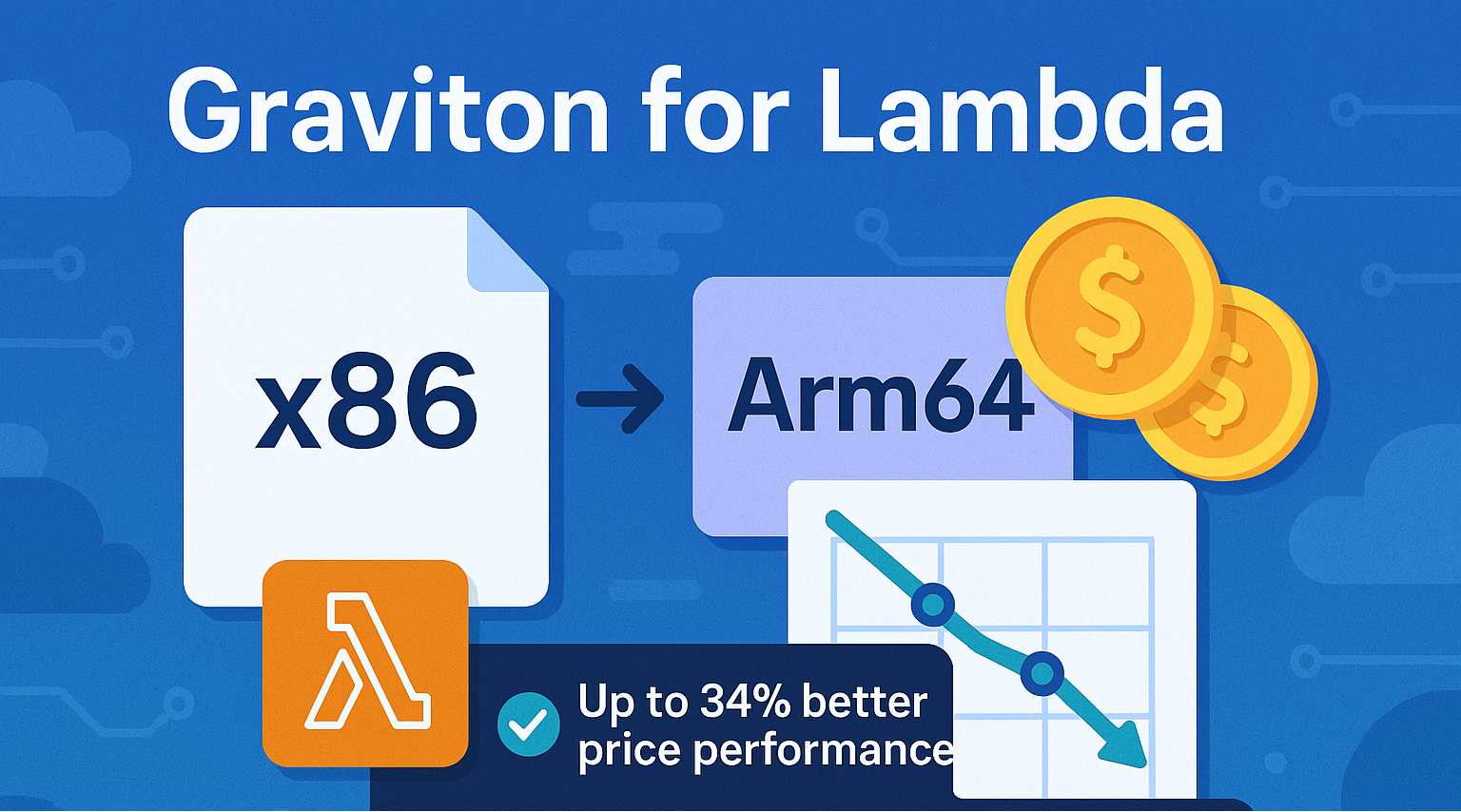
Unlike EC2 or RDS, you don’t choose an instance type for Lambda — but you do choose the CPU architecture. By switching your functions from x86 to Arm64, you can cut costs and achieve optimal performance, especially for compute-heavy or latency-sensitive workloads.
Graviton2-backed Lambdas offer:
- Up to 34% better price-performance
- Lower average latency in benchmarks (especially cold starts and CPU-bound tasks)
- Reduced cost per invocation, thanks to Lambda’s millisecond-level billing granularity
You’ll see the biggest gains on workloads that run frequently or use a lot of memory/CPU — like ETL jobs, image processing, or data transformations.
To get started, update your Lambda’s architecture to Arm64 in the console, AWS CLI, or infrastructure as code. Most interpreted languages (Node.js, Python) and container-based functions will work without changes. Test performance before switching in production, especially if your code includes native binaries or compiled dependencies.
Graviton for ElastiCache & MemoryDB
Graviton is available for Redis and Memcached in ElastiCache, and for Redis in MemoryDB. These workloads are memory-bound and often latency-sensitive — exactly where Graviton shines. Common use cases include caching for web applications, session storage, and low-latency data analytics pipelines.
- Supported instance types: C6g, C7g, C8g, M6g, M7g, M8g, R6g, R6gd, R7g, R7gd, R8g, R8gd
- ElastiCache (Redis):Up to 45% better price-performance
- MemoryDB:Up to 34% lower cost per transaction
To get started, launch or update your cluster using a Graviton-based node family. No changes to your Redis or Memcached configuration are needed.
Graviton for OpenSearch
OpenSearch (and formerly Elasticsearch) now supports Graviton for both data and master nodes, making it a straightforward cost optimization for search and logging workloads.
- Supported instance types: M6g, R6g, R6gd, C6g, C7g, M7g, R7g, R7gd
- Benchmarked benefits:Up to 30% better price-performance on indexing and querying
To migrate, change the instance types for your OpenSearch domain nodes in the console or via CloudFormation.
Graviton for EMR & Fargate
You don’t have to be running web apps to benefit from AWS Graviton-based instances — it also helps behind the scenes.
- Amazon EMR on EC2 supports M6g, C6g, C7g, and R6g for jobs like Spark, Hive, and Presto, offering up to 30% better price-performance.
- AWS Fargate now supports Graviton-based compute for ECS and EKS — no instance management required, and you can expect around 20% lower cost per task with comparable performance.
To get started, choose Graviton-based instance families for EMR clusters, or set the platform version and architecture in your Fargate task definition.
How does Graviton pricing work?
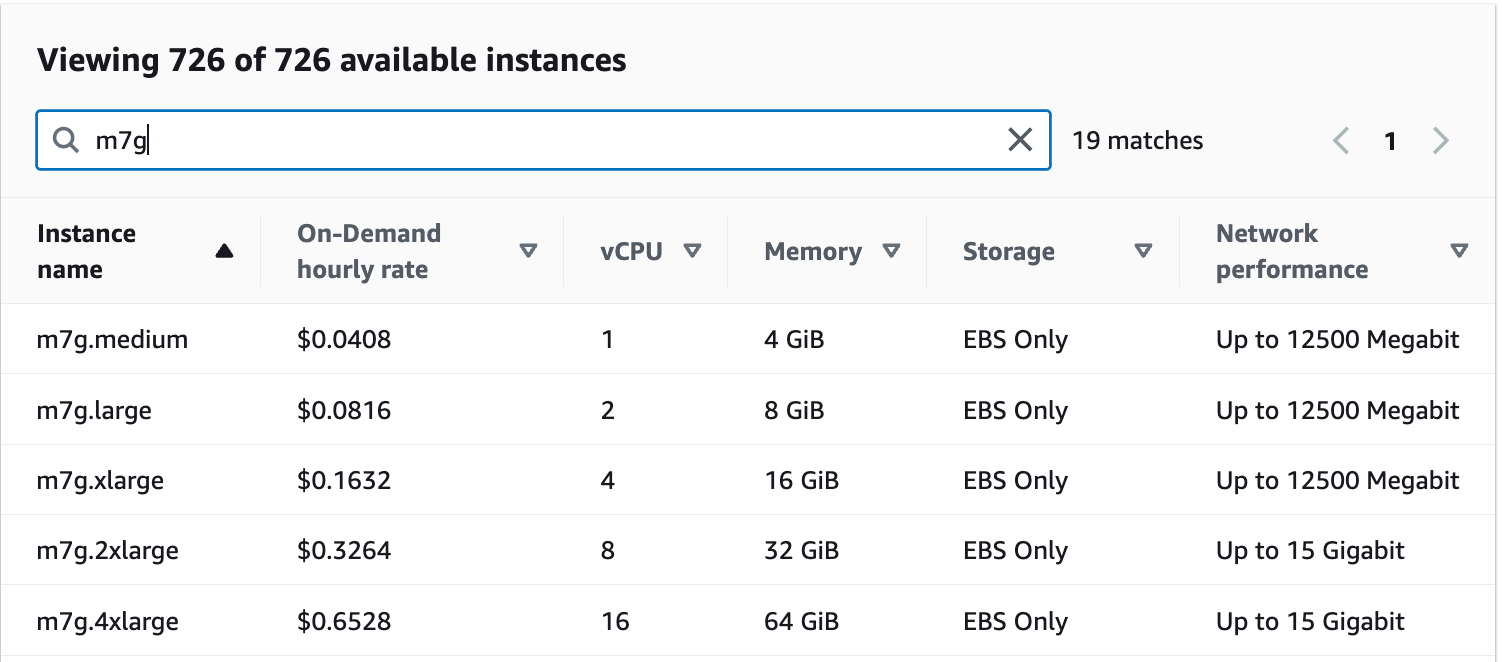
AWS Graviton pricing primarily follows the standard AWS pricing model for EC2 instances, which is based on several factors.
Instance Type:
The cost varies depending on the instance family (like M6g, C6g, R6g) and the specific instance size within that family. Each family is optimized for different types of workloads, such as general-purpose, compute-optimized, etc. Other instances are optimized for memory-intensive workloads or storage-intensive workloads.
Usage Time:
Amazon EC2 instances are typically billed by the second, with a minimum of 60 seconds. This means you pay only for the compute time you use.
Region:
AWS Graviton prices can vary by AWS region. For example, instances in North American regions might be priced differently from those in Asia or Europe.
Operating System:
Graviton instances use the Arm architecture and are designed primarily for Linux-based workloads. Applications that rely on architecture-specific binaries or dependencies may need to be rebuilt or replaced before migration.
Using additional features like Elastic Block Store (EBS), data transfer, or Elastic IP addresses can add to the costs (these are billed separately).
Purchasing Options for Graviton
There are three models for purchasing Graviton instances:
On-Demand: Pay for what you use without any upfront cost.
Reserved Instances/Savings Plans: Commit to a specific instance type in a region for a term of one or three years, with the option to pay all, some, or none of the cost upfront. This commitment can significantly reduce hourly costs.
Spot Instances: Purchase unused Amazon EC2 capacity at potentially significant discounts compared to the On-Demand price. Spot instance pricing is variable, based on supply and demand, and instances can be interrupted by AWS with a two-minute notification.
Save on AWS with nOps
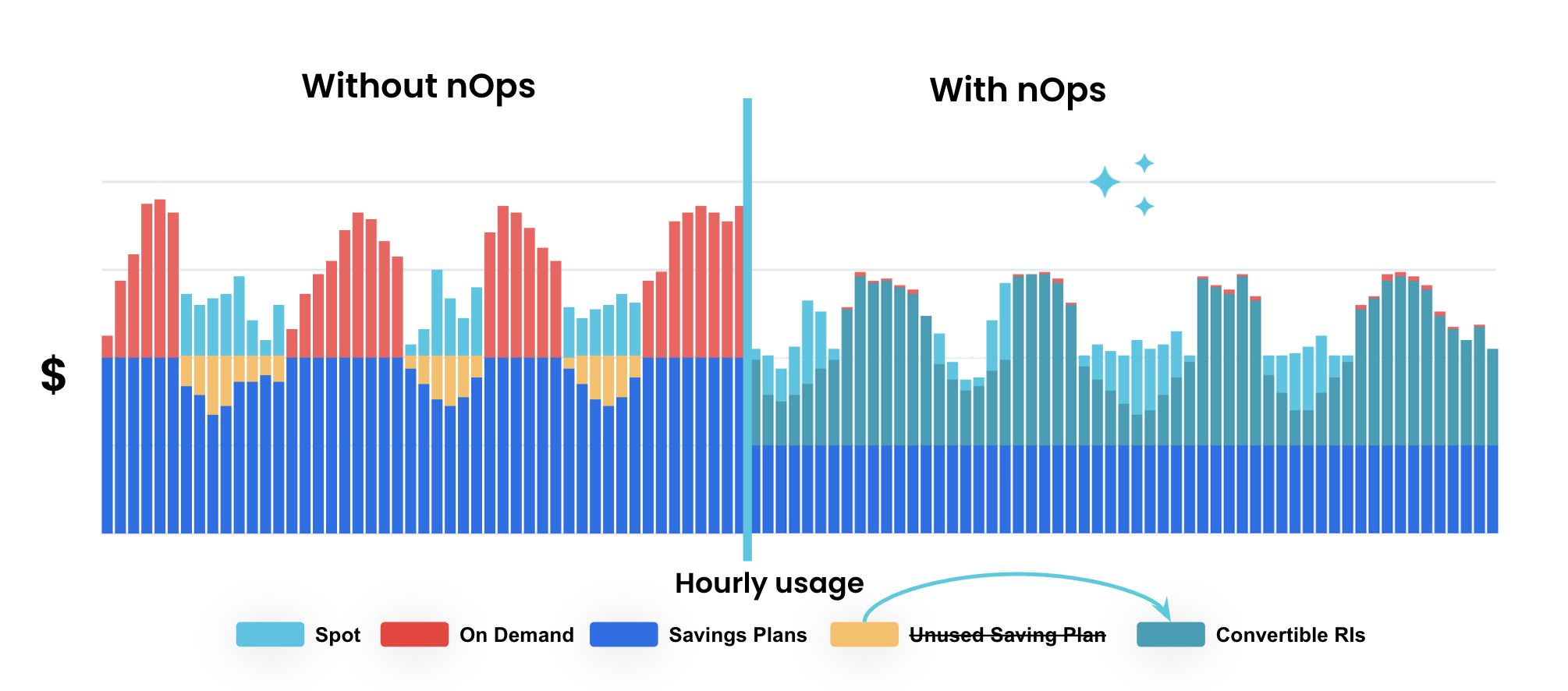
Migrating to Graviton can improve price-performance, but commitments are the biggest savings lever when it comes to AWS. nOps makes it easy to understand optimize your AWS costs with:
Commitment Management: Save 50-60% autonomously on AWS costs while reducing your lock-in and risk. The pricing model is a percentage of savings, ensuring you only pay for results.
Cost Visibility & Allocation: See which teams, products, and features are driving spend across multicloud, AI, Kubernetes, and SaaS—with anomaly detection, budgeting, forecasting, and reporting.
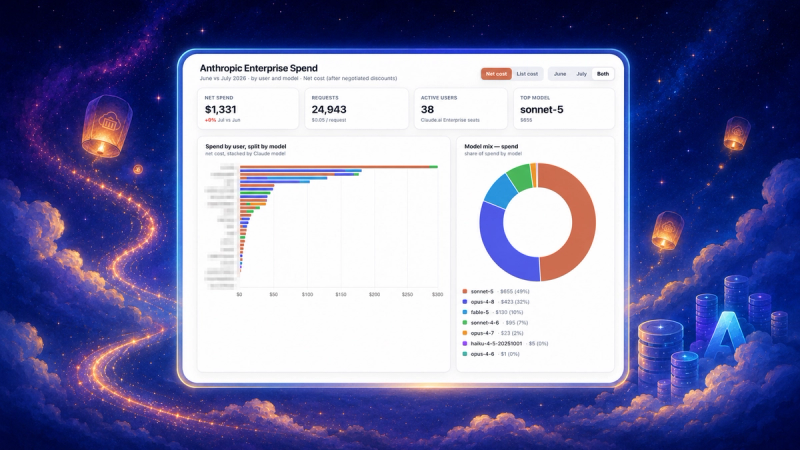
AI Insights: Identify opportunities to optimize token usage, model selection, caching, provisioned throughput, and batch processing.
nOps processes over $4 billion in cloud spend and was recently named #1 in G2's cloud cost management category. You can book a free savings analysis to find out how nOps can help you start saving today!